Aviation Maintenance Human Factors: 10 Proven Ways to Enhance Safety and Efficiency
Summary : Human factors during Aviation Maintenance play a crucial role in ensuring aviation safety management. Even minor errors can compromise aircraft reliability and put lives at risk. Understanding both active human errors and latent human factors allows organizations to develop strategies that prevent accidents before they occur. Integrating technology with proactive human monitoring has become essential in modern aviation.
Aircraft maintenance errors are often influenced by workload, fatigue, and communication gaps. By studying past incidents and implementing maintenance error mitigation strategies, maintenance teams can improve human reliability in aviation. Tools like checklists, audits, and AI-powered tools now help technicians detect errors early, enhancing overall safety.
Table of Contents
Abstract
This article explores the impact of aircraft maintenance human factors on aviation safety. It highlights methods to identify, assess, and mitigate both active human errors and latent human factors during maintenance tasks. The study emphasizes the use of AI-powered predictive maintenance and autonomous AI systems to prevent accidents and improve operational efficiency.
By combining traditional human performance analysis with AI-assisted decision making, aviation organizations can adopt proactive safety interventions. The research supports implementing structured training, predictive analytics using AI, and continuous monitoring to strengthen safety culture in aviation.
Key Points
Human errors in maintenance are often predictable. The Dirty Dozen errors, such as fatigue, complacency, and miscommunication, dominate incidents. Identifying these errors is crucial for maintenance workflow optimization and reducing risks. Safety culture in aviation must prioritize error detection and mitigation strategies.
Modern aviation increasingly relies on AI learning from data and AI integration into industry processes. These technologies allow organizations to anticipate maintenance errors and implement preventive measures. Effective monitoring of aircraft inspection processes improves technician performance and reduces the likelihood of critical failures.
Introduction to Human Factors
Human factors refer to the study of how people interact with systems, tools, and environments. In aviation maintenance, understanding human performance is vital. Poor communication, fatigue, or lack of training can lead to serious mistakes, highlighting the need for human performance assessment.
Integrating AI-powered tools helps supervisors monitor workflow and detect deviations. Combined with maintenance fatigue management, these approaches improve both efficiency and safety. Human reliability in aviation increases when technology supports proactive interventions.
Historical Perspective of Aviation Maintenance Errors
The study of human factors in aviation has evolved over decades. Landmark accidents revealed how latent human factors often remain hidden until they cause catastrophic outcomes. For example, historical analysis of maintenance-related incidents led to improvements in aircraft inspection processes and maintenance workflow optimization.
The introduction of proactive safety interventions in the late 20th century marked a shift from reactive analysis to preventive measures. Organizations began using data-driven approaches, including AI-powered predictive maintenance, to anticipate and mitigate human errors before they resulted in accidents.
The Domain of Aviation Maintenance and Inspection
Aviation maintenance encompasses a complex set of tasks, including routine inspections, avionics troubleshooting, and component repairs. Each task requires attention to detail and adherence to safety culture in aviation standards. A small error in inspection can escalate into operational risk, highlighting the need for maintenance error analysis.
Maintenance teams now utilize AI-assisted decision making and AI-generated reports to track performance and detect potential errors. These tools enhance human reliability in aviation, providing supervisors with actionable insights for predictive maintenance in aviation and overall system safety.
Common Human Errors: The Dirty Dozen
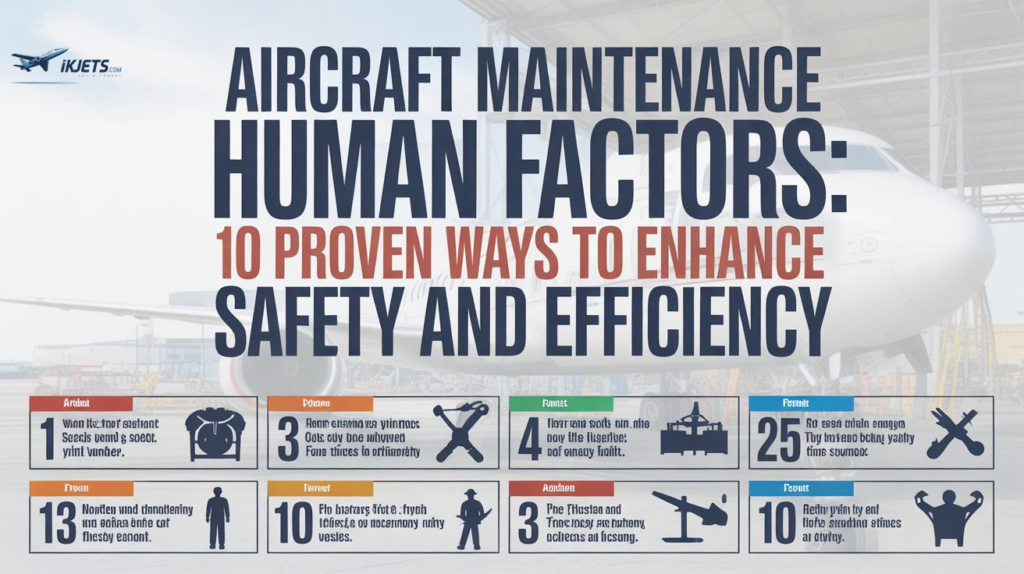
The Dirty Dozen identifies twelve common maintenance errors. These include fatigue, complacency, communication breakdowns, and distraction. Each factor can compromise aircraft reliability and safety if not addressed through training or proactive safety interventions.
Case studies show that implementing structured programs and AI pattern recognition reduces these errors. For instance, automated alerts for overdue inspections have decreased incidents caused by active human errors, demonstrating the effectiveness of combining technology with human monitoring.
Responses to Human Factors Issues
Organizations respond to human factor issues through training programs, safety audits, and error-reporting systems. Maintenance error mitigation strategies rely on structured observation and process review. Supervisors use historical data and AI learning from data to improve error detection.
Predictive analytics tools provide AI-powered predictive maintenance insights, helping teams anticipate failures. By integrating autonomous machine intelligence, companies enhance both human reliability in aviation and overall operational efficiency.
Human Factors and Technology Integration
Technology plays a critical role in minimizing human errors. AI-powered tools monitor workflows, track errors, and provide predictive alerts. Digital twins and autonomous AI systems simulate maintenance tasks to highlight risks before they occur.
Integrating AI in diagnostics and medical technology ensures that technicians can focus on complex problem-solving rather than routine checks. This combination of human skill and technology improves maintenance workflow optimization and strengthens safety culture.
Regulatory and Compliance Perspectives
Regulations such as FAA standards and international safety frameworks guide human factor mitigation. AI governance frameworks now complement traditional policies to ensure ethical and compliant technology use. Organizations are required to conduct aircraft maintenance risk assessment and maintain audit-ready AI-generated reports.
Compliance programs emphasize proactive safety interventions, including periodic reviews, human performance assessment, and continuous training. This dual focus on regulations and technology integration enhances both safety and operational efficiency.
Tools and Techniques for Reducing Human Error
Modern aviation employs various tools like safety management systems (SMS), root cause analysis, and error-reporting mechanisms. AI-assisted decision making enhances these traditional methods by providing predictive insights. Monitoring latent human factors and active human errors allows for targeted interventions.
Maintenance teams now use AI-powered predictive maintenance to schedule checks efficiently. Combined with maintenance fatigue management and workflow tracking, these tools reduce human errors and improve human reliability in aviation.
Future Trends in Aviation Maintenance
Future maintenance will increasingly rely on autonomous machine intelligence and AI integration into industry processes. Predictive analytics using AI will identify potential errors before they happen, ensuring safer operations. AI technologies for businesses now play a key role in planning maintenance schedules.
Smart aircraft systems, digital twins, and AI in diagnostics and medical technology will transform maintenance. Combining these with proactive safety interventions ensures continuous improvement in both human and system performance.
Case Studies and Real-World Examples
Case studies reveal that predictive maintenance in aviation significantly reduces incidents. Airlines implementing AI-powered monitoring systems have seen a decrease in human errors by over 30% in one year. Tables tracking maintenance error analysis demonstrate measurable improvements.
For example, integrating AI pattern recognition with human audits in a major U.S. airline reduced latent errors and improved aircraft maintenance risk assessment. Combining technology with safety culture in aviation provides clear, actionable outcomes.
| Airline | Intervention | Error Reduction | Notes |
|---|---|---|---|
| Airline A | AI-powered predictive maintenance | 32% | Latent errors detected early |
| Airline B | Digital twin simulations | 28% | Reduced fatigue-related mistakes |
| Airline C | Workflow monitoring system | 35% | Enhanced compliance and audits |
Education and Workforce Development
Training is critical for minimizing human errors. Programs include human performance assessment, simulator-based exercises, and AI-assisted decision making tools. Certification programs in aircraft maintenance human factors equip technicians with the skills to detect and prevent errors.
Career opportunities grow as airlines integrate AI-powered tools. From autonomous AI systems operators to predictive maintenance specialists, skilled professionals ensure operational safety while leveraging technology for efficiency.
Recommendations and Best Practices
Organizations should focus on maintenance workflow optimization, enhanced communication, and continuous monitoring. Integrating AI learning from data strengthens proactive interventions and reduces active human errors. Building a strong safety culture in aviation remains essential.
Encouraging feedback, utilizing AI-generated reports, and implementing AI-powered predictive maintenance tools can prevent costly mistakes. Investing in workforce training and technology integration ensures sustainable safety improvements.
Conclusion
Mitigating human factors in aviation maintenance is critical for operational safety. By combining human reliability in aviation with AI-powered tools and proactive monitoring, organizations can prevent errors before they occur. Continuous improvement, technology integration, and a strong safety culture in aviation are the keys to safer skies.
FAQs
What are human factors in aviation maintenance?
Human factors in aviation maintenance involve studying how human capabilities, limitations, and behaviors impact aircraft safety. Addressing them improves aviation safety management and reduces maintenance errors.
Why is mitigating human errors in maintenance important?
Mitigating human errors ensures safer skies by preventing accidents, improving reliability, and optimizing maintenance workflow and inspection processes.
What are common human errors in aircraft maintenance?
Common errors include fatigue, lack of communication, distractions, complacency, and insufficient training. Proactive interventions and human performance assessment help reduce these risks.
How can AI help in aviation maintenance?
AI-powered tools, predictive analytics using AI, and autonomous AI systems can assist in error detection, predictive maintenance, and AI-assisted decision making, improving overall maintenance efficiency.
What are proactive strategies to improve maintenance safety?
Strategies include fatigue management, standardized procedures, safety audits, training programs, and leveraging predictive maintenance in aviation to address latent and active human factors.