Avionics Explained: 10 Powerful Systems, Uses & Future Trends for 2026
Summary: Avionics Explained covers the avionics definition and why these systems matter in modern aviation. From small planes to jumbo jets, aircraft electronic systems keep flights safe, smooth, and accurate. Pilots rely on cockpit electronics for navigation, communication, and weather updates. These tools also help airlines save fuel and reduce delays. As technology grows, more aircraft are moving toward digital cockpits and smart automation. This guide breaks down the key avionics systems, how they work together, and what the future holds for 2026. Whether you’re a new pilot or just curious, you’ll understand how avionics truly power the sky.
Avionics is the heart of modern flight. It keeps aircraft safe, connected, and accurate. From navigation to communication, avionics systems help pilots control the aircraft in all conditions. This guide explains what avionics mean, how systems work together, and what the future holds for 2026.
Table of Contents
What Are Avionics? Definition and Core Meaning
Avionics is the term for aviation electronics used in aircraft. These systems include everything from cockpit screens to satellite communication. In simple words, avionics definition means the electronic tools that help pilots fly safely. The term comes from combining “aviation” and “electronics”.
The most basic example is cockpit electronics, like displays and radios. These systems collect data from sensors and present it to the pilot. Without avionics, modern air travel would be unsafe and slow. Aircraft electronic systems are essential for every flight, no matter the aircraft size.
Why Avionics Matter in Modern Aviation
Avionics is critical for safety and efficiency. It helps pilots avoid bad weather, traffic, and navigation errors. The main reason is that aircraft navigation systems rely on avionics to stay accurate and stable. These systems also reduce pilot workload, making flights smoother and safer.
Modern avionics also support flight communication systems. Pilots use radios and satellite links to talk with air traffic control. This communication is vital during emergencies and when changing routes. Avionics also help airlines manage flights and reduce delays.
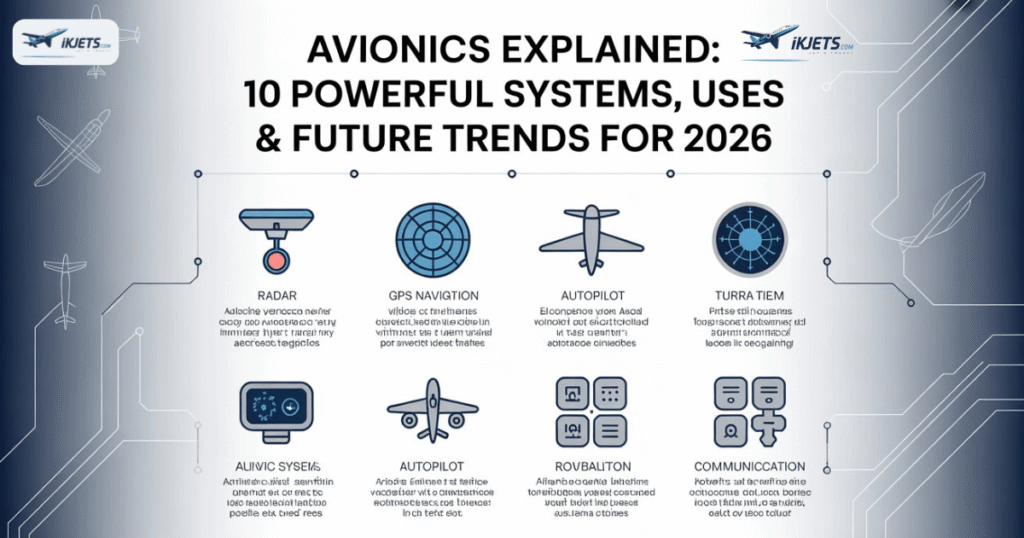
System 1 — Communication Avionics
Communication avionics include VHF radio communication, UHF aircraft communication, and satellite communication (SATCOM). These systems let pilots talk with ATC and ground crews. In busy airports, clear communication prevents accidents and keeps traffic moving smoothly.
The most common system is VHF radio, used for most flights. SATCOM is used for long-distance flights over oceans. It provides global coverage and helps pilots stay connected. Flight communication systems are a major part of safe aviation today.
System 2 — Navigation Avionics
Navigation avionics guide aircraft from departure to destination. These systems use GPS avionics, WAAS navigation, VOR navigation system, and ILS landing system. They help pilots know the exact position and route. Modern navigation uses satellites, but older systems still help in emergencies.
The navigation system also helps pilots land in poor visibility. WAAS navigation improves GPS accuracy for safe approaches. The ILS landing system guides planes during fog or heavy rain. This makes air travel reliable in all weather.
System 3 — Flight Control & Autopilot
Flight control systems help the pilot steer the aircraft. The autopilot systems can fly the plane automatically for long periods. This reduces pilot fatigue and improves accuracy. Autopilot can manage speed, altitude, and direction during long flights.
The most advanced flight control systems link to the flight management system (FMS). This allows automatic route planning and fuel optimization. Pilots still monitor the system, but automation makes flights smoother and safer.
System 4 — Weather Radar and Weather Systems
Weather radar avionics detect storms and turbulence ahead. These systems help pilots avoid dangerous weather. The radar scans the sky and shows areas of heavy rain and lightning. This improves safety and comfort for passengers.
Pilots also use weather data for fuel planning. Strong headwinds or storms can increase fuel use. Weather systems help pilots adjust altitude or route. This makes flights safer and more efficient.
System 5 — Fuel Management and Monitoring
Fuel systems track how much fuel is on board and how much is used. The fuel quantity indication system (FQIS) measures fuel in real time. The fuel monitoring system (FCMS) tracks fuel flow and efficiency. These systems prevent fuel shortage and improve safety.
Modern avionics also help in planning fuel for long flights. Airlines can save money by optimizing fuel use. The systems also alert pilots if fuel levels drop unexpectedly. This is crucial for safe flight operations.
System 6 — Collision Avoidance Systems (TCAS)
TCAS is the traffic alert and collision avoidance system. It warns pilots about nearby aircraft and possible collisions. The system uses radar signals to track other planes. When needed, it suggests a safe direction to avoid collision.
TCAS has reduced mid-air accidents worldwide. It works in both commercial and private aviation. It also supports automatic alerts and clear instructions. What is TCAS system is a common question, and the answer is that it is a major safety tool for all flights.
System 7 — Flight Data Recorders & Cockpit Voice Recorders
Flight data recorders and cockpit voice recorders are known as the “black box”. They store flight information and cockpit audio. In accidents, they help investigators understand what happened. These systems improve safety by learning from mistakes.
The recorders store data like speed, altitude, and control movements. They also capture pilot communication. This helps in identifying causes of incidents and preventing future accidents. Flight data recorders avionics are essential for aviation safety.
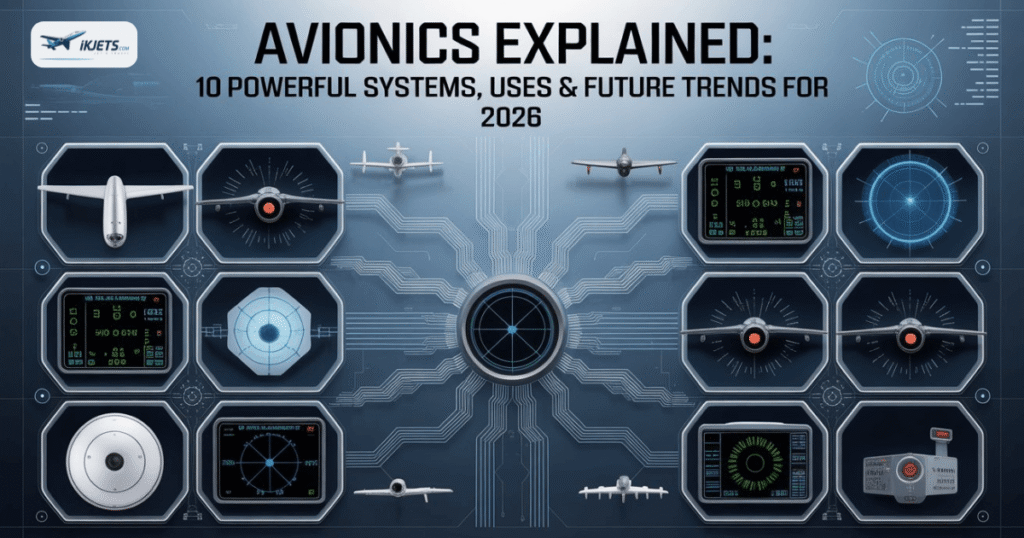
System 8 — Integrated Flight Deck Displays (Glass Cockpit)
A glass cockpit uses digital screens instead of analog instruments. It includes electronic flight instrument system (EFIS), PFD, and multi-function displays. This modern setup makes information easier to read. It also reduces cockpit clutter and improves situational awareness.
Glass cockpit upgrades are common in aviation today. Many aircraft move from the “six-pack instruments” to full digital systems. Digital cockpit upgrades help pilots stay informed and safe. The future will include even more advanced display systems.
System 9 — Sensors & Monitoring Systems
Monitoring systems track aircraft health and performance. They include engine monitoring, pressure sensors, and gyroscopes. These systems send real-time data to the cockpit. This helps pilots respond quickly to issues.
Sensors also support avionics testing and calibration during maintenance. This ensures accuracy and reliability. Modern aircraft rely on sensors for safe flight control and navigation.
System 10 — Advanced Connectivity & In-Flight Internet
In-flight connectivity is changing aviation. New systems use satellite internet and advanced networking. This allows passengers to stream content and stay connected. Airlines also use connectivity for real-time data and flight updates.
The future will include more advanced systems like LEO satellite internet. This will improve speed and coverage. The focus will be on comfort and safety, and this is a major trend for future of avionics 2026.
Future Trends in Avionics for 2026
The future of avionics will include AI, automation, and improved cybersecurity. Aircraft will rely more on software and data analytics. New systems will also support autonomous flight features and smart maintenance.
Airlines will also focus on upgrading older aircraft with modern avionics. This helps improve safety and extend aircraft lifespan. The aviation industry is moving fast, and avionics will remain the core of flight innovation.
Avionics Upgrades and Modernization: What Pilots Need to Know
Avionics upgrades help aircraft stay current and safe. Many older aircraft still use analog instruments. Modern upgrades convert them to digital systems. This improves accuracy, reduces pilot workload, and increases resale value.
Upgrading avionics requires FAA certification and careful planning. It includes testing, calibration, and installation. The process improves flight performance and safety. How to modernize aircraft avionics is a common question among aircraft owners.
Avionics Safety and Compliance in the USA
FAA regulations ensure avionics systems are safe and reliable. Aircraft must pass regular inspections and maintenance checks. Avionics technicians must follow strict rules for certification and repair.
Compliance also includes software updates and system calibration. This prevents failures and ensures accuracy. FAA avionics certification is essential for all aircraft operating in the USA.
Conclusion
In 2026, Avionics Explained shows how modern aviation depends on smart electronics more than ever. From aircraft navigation systems to flight communication systems, these tools keep every flight safe and efficient. Avionics upgrades and digital cockpit technology are shaping the future of flying, while FAA certification and regular maintenance ensure reliability. When systems like autopilot, TCAS, and EFIS work together, they create a strong safety net for pilots. Whether you fly for work or travel for fun, understanding avionics helps you appreciate how flights stay smooth and secure. Avionics are not just tools, they are the backbone of aviation.
FAQs
What is avionics in aircraft?
Avionics is the electronic systems used in aircraft for navigation, communication, and safety.How does autopilot work?
Autopilot uses flight control systems and sensors to steer the aircraft automatically.What is a flight management system?
FMS helps plan routes, manage fuel, and guide navigation using data and automation.What is glass cockpit?
A glass cockpit replaces analog instruments with digital displays and modern avionics systems.Why avionics upgrades are important?
Upgrades improve safety, efficiency, and compliance with modern standards.